
Identify what you are seeing

Pest Library

Compare common signs and appearance clues for the ants, spiders, stingers and nuisance pests included in our monthly protection plan.

Photos and descriptions are a starting point, not a diagnosis. Avoid handling unknown spiders or active stinging-insect nests; Pestgone can confirm the species before treatment.

View the monthly plan

Category 1

Ants

Ant species behave differently, so correct identification helps us choose the right bait, placement and exterior treatment.
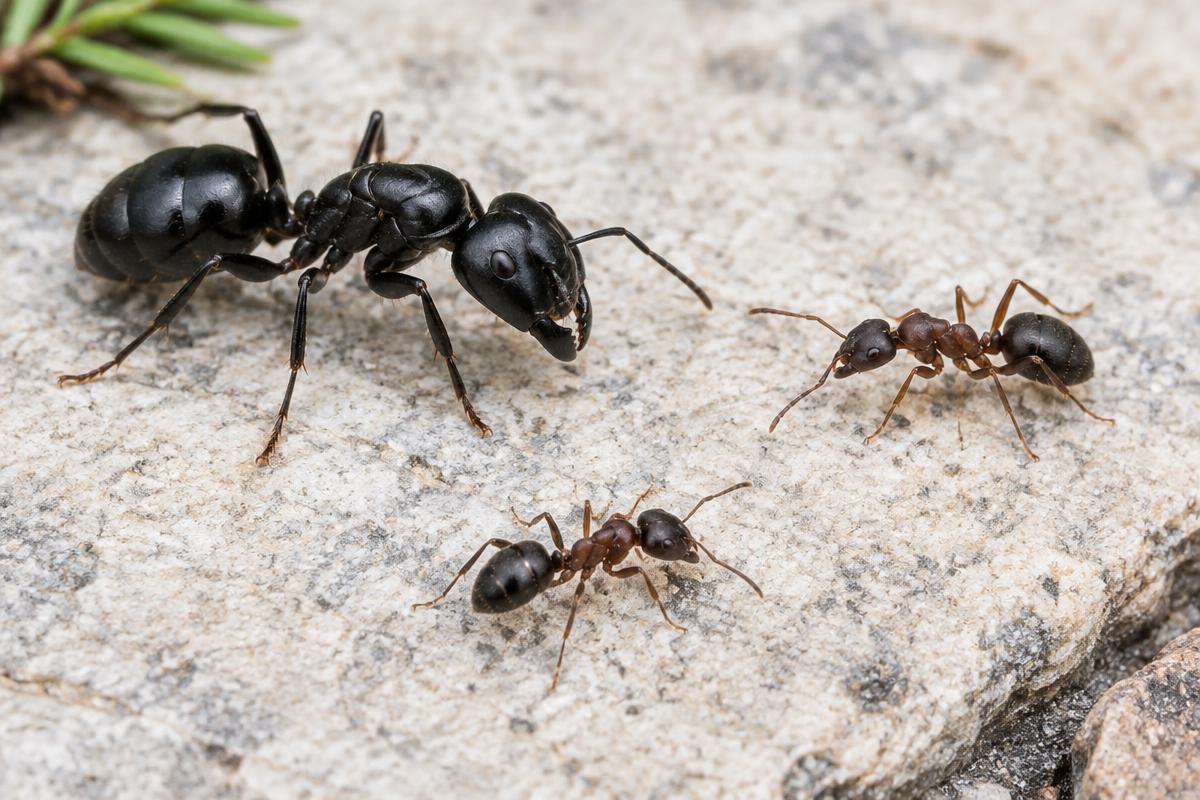
Common household ants on stone

Odorous House Ant

Identification
Small brown-to-black ants that release a noticeable odour when crushed.
Common signs
Long indoor trails near sinks, counters and moisture.

Pavement Ant

Identification
Small dark ants that commonly nest beneath concrete and interlock.
Common signs
Soil piles near cracks, foundations, patios and driveways.

Fire Ant

Identification
Reddish ants known for aggressive colony defence and painful stings.
Common signs
Active soil mounds and ants that swarm when disturbed.

Professional identification is recommended; true fire ants are not commonly established in Ontario.

Carpenter Ant

Identification
Large black or reddish-black ants that excavate damp or damaged wood.
Common signs
Coarse sawdust, winged ants and activity around wet framing.

Little Black Ant

Identification
Very small, glossy black ants that form visible foraging trails.
Common signs
Trails around foundations, kitchens, masonry and gardens.

Pharaoh Ant

Identification
Tiny pale yellow ants with darker abdomens that favour warm buildings.
Common signs
Persistent trails around kitchens, bathrooms and wall voids.

Thief Ant

Identification
Extremely small yellow-to-brown ants that often nest near other colonies.
Common signs
Tiny workers around greasy foods, cupboards and wall cracks.

Argentine Ant

Identification
Small light-to-dark brown ants that travel in broad, busy trails.
Common signs
Large trails around foundations, trees and food sources.

Distribution is limited locally; identification confirms the right treatment.

Category 2

Spiders

Heavy spider activity often points to abundant insect prey, exterior lighting or sheltered entry points around the structure.
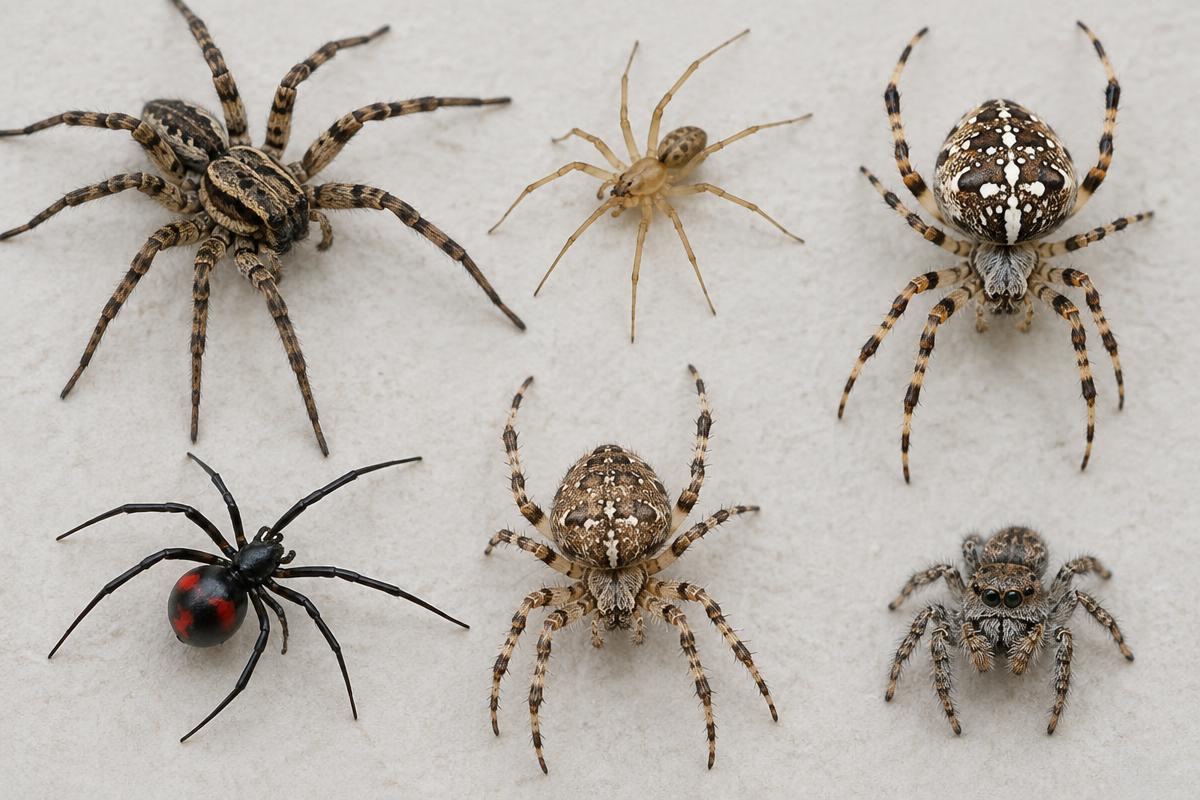
Several common spider types on a pale surface

Black Widow Spider

Identification
Glossy dark spider; mature females may show a red hourglass underneath.
Common signs
Strong, irregular webs in quiet protected spaces.

Avoid handling any suspected widow spider; request professional identification.

Wolf Spider

Identification
Robust, fast-moving hunting spider with brown or grey markings.
Common signs
Ground-level activity in basements, garages and near doors.

Brown Recluse Spider

Identification
Brown spider often associated with a violin-shaped marking.
Common signs
Hiding in undisturbed boxes, clothing or storage areas.

Brown recluse spiders are not established in Ontario; many local spiders are misidentified as this species.

House Spider

Identification
Small brown spider that builds tangled webs in corners and windows.
Common signs
Dusty cobwebs, egg sacs and repeated corner webbing.

Hobo Spider

Identification
Brown funnel-weaving spider with long legs and subtle markings.
Common signs
Funnel-shaped webs close to floors, foundations and window wells.

Professional identification helps distinguish it from common local funnel weavers.

Brown Widow Spider

Identification
Mottled tan-to-brown widow spider with banded legs.
Common signs
Irregular webs in protected outdoor furniture and storage.

This species is uncommon in Ontario; do not handle a suspected specimen.

Garden Spider

Identification
Large patterned orb-weaver that builds a circular web outdoors.
Common signs
Large geometric webs across shrubs, eaves and garden paths.

Category 3

Stingers

Nests near entrances, decks and play areas need careful treatment. Do not seal an active wall opening or disturb a nest.
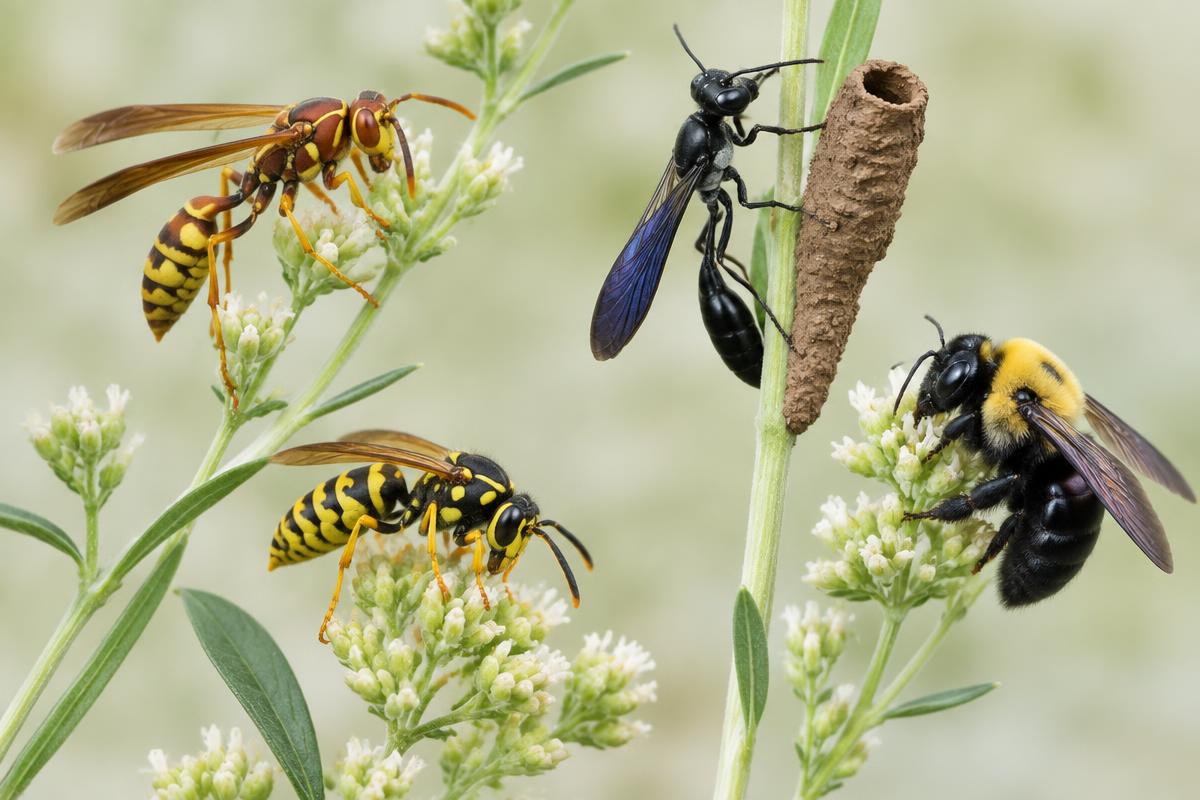
Wasps and a carpenter bee on plants

Paper Wasp

Identification
Slender wasp with long legs and a small open-comb paper nest.
Common signs
Umbrella-shaped nests below eaves, railings and fixtures.

Mud Dauber

Identification
Narrow-waisted solitary wasp, often dark or metallic in colour.
Common signs
Tube-like mud nests on walls, garages and sheltered surfaces.

Yellow Jacket

Identification
Compact black-and-yellow wasp that aggressively defends its colony.
Common signs
Steady flight into ground holes, wall voids or soffits.

Carpenter Bee

Identification
Large bee with a smooth, shiny abdomen that bores into wood.
Common signs
Round holes and coarse dust beneath decks, fascia and trim.

Category 4

Rodents

Rodents squeeze through small gaps seeking food and warmth. Effective control combines treatment with sealing entry points.

Rodent control for mice and rats

House Mouse

Identification
Small grey-brown rodent with large ears and a thin tail about body length.
Common signs
Droppings, gnaw marks and shredded nesting material in kitchens and walls.

Norway Rat

Identification
Large, heavy-bodied brown rat with a blunt snout and short tail.
Common signs
Burrows along foundations, greasy rub marks and droppings in basements.

Roof Rat

Identification
Slender black rat with a pointed snout and long tail, an agile climber.
Common signs
Nesting in attics, soffits and upper levels; noises above ceilings at night.

Deer Mouse

Identification
Grey-to-brown mouse with white underside and feet.
Common signs
Droppings in garages, sheds and cabins; can carry hantavirus, so avoid sweeping droppings dry.

Professional cleanup is recommended due to hantavirus risk.

Category 5

Nuisance Pests

Many occasional invaders move indoors because of moisture, weather changes, stored food or gaps around the exterior.
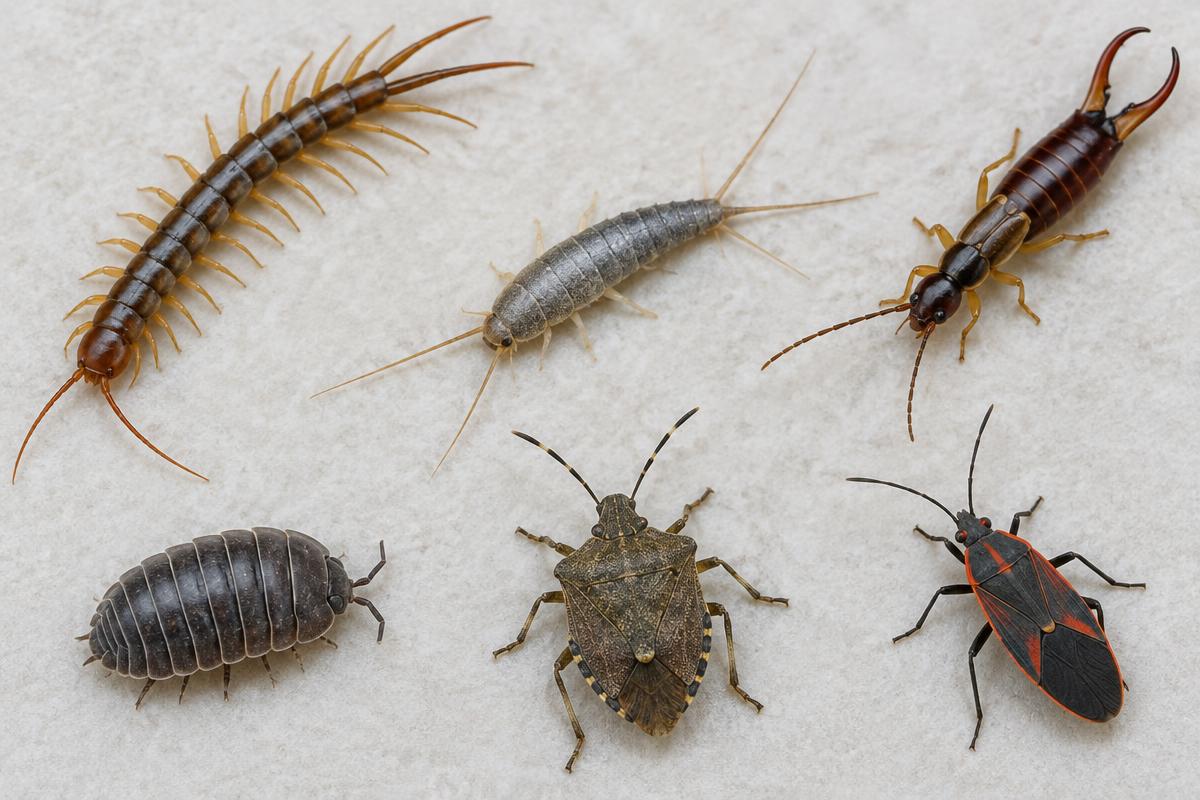
Common nuisance insects including a centipede and silverfish

Centipede

Identification
Fast-moving, flattened arthropod with one pair of legs per body segment.
Common signs
Sightings in damp basements, bathrooms and crawl spaces.

Millipede

Identification
Slow-moving, rounded arthropod with many short legs that curls when disturbed.
Common signs
Clusters near damp foundations, doors and lower-level rooms.

Pill Bug

Identification
Small grey crustacean that rolls into a tight ball.
Common signs
Activity beneath mulch, stones and damp basement edges.

Flea

Identification
Tiny wingless insect with strong jumping legs.
Common signs
Bites around ankles, pet scratching and dark specks in bedding.

Sow Bug

Identification
Grey segmented crustacean similar to a pill bug but unable to roll up.
Common signs
Activity in damp organic debris, crawl spaces and foundations.

Earwig

Identification
Elongated brown insect with curved pincers at the rear.
Common signs
Night-time activity near damp landscaping, doors and bathrooms.

Grain Beetle

Identification
Small reddish-brown pantry beetle associated with dry foods.
Common signs
Beetles or larvae in flour, cereal, rice, spices and packaging.

Silverfish

Identification
Silvery, tapered insect with three tail-like filaments.
Common signs
Damage to paper and fabrics, plus sightings in humid rooms.

Stink Bug

Identification
Shield-shaped brown or green insect that gives off an odour when disturbed.
Common signs
Seasonal clusters on sunny walls, windows and attics.

Boxelder Bug

Upon request
Identification
Black bug with distinctive red-orange lines along the wings.
Common signs
Large autumn clusters on warm exterior walls and windows.

Treatment is available upon request under the monthly protection plan.

Protection made simple

First month free, then $64.99 monthly.

Quarterly exterior treatment, no hidden fees and unlimited covered-ant visits.

Request enrollment

Pest problem? Get it under control.

Call for a straight answer about your situation, what treatment involves, and when we can attend.

Call us365-293-5253Emailinfo@pestgonecontrol.com
Service areaGTA, Hamilton, KWC, London
HoursMon – Sun · 8:00 AM – 8:00 PM

Get a Free Quote

Same-day response. No obligation.

Call